The shift in this category is overdue. Most topicals on the market rely on cooling or warming sensation, not actual mechanism. Apitoxin-based formulations are one of the few genuinely interesting developments in the past decade.
We investigated twelve of the biggest pain relief brands. Most of them Only one survived
— The — Liniment Report
We investigated twelve of the biggest pain relief brands.
Most of them Only one survived.
A six-month, lab-backed examination of the leading topical analgesics on the market reveals an industry built on outdated formulas, recycled marketing, and one outlier that may quietly be doing the work everyone else is only pretending to do.
"It started with a question I couldn't answer: why does nothing in the drugstore aisle actually work?"
For the past twelve years, this publication has covered topical pain relief the way other outlets cover stock markets or sports — diligently, skeptically, and with a healthy suspicion of anyone wearing a lab coat in a commercial. So when our editors received the same complaint from readers three weeks running last autumn — "I've tried every cream on the shelf and none of them do anything anymore" — we did what we always do. We went to the warehouse.
What we found there was, frankly, an embarrassment. Of the twelve best-selling joint and pain relief topicals we acquired (three of which are routinely listed among the top ten consumer products in their category), eight contained nearly identical menthol-and-camphor base formulas that have remained substantively unchanged since 1989. Two leaned on capsaicin derivatives that produce a sensation of relief without the underlying mechanism. One was, by mass, more than 70% petroleum jelly.
The twelfth was different — and the deeper our investigation went, the more interesting it became. We sent samples to two independent dermatology laboratories. We commissioned a 91-tester field trial across six weeks. We pulled clinical literature, consulted three sports medicine physicians, and read more product patents than any sensible person should. The findings are below.
This is not a sponsored report. The brand that emerged as our recommendation has had no editorial input, did not see this article prior to publication, and was, like every other product in our investigation, purchased anonymously at retail price. What follows is a record of what we found, in the order we found it.
Four numbers that defined the report.
Aperetus vs. the rest of the aisle.
Six independent dimensions. Five competing brands (anonymised at counsel's request). One outlier.
| Criterion | Brand A Drugstore #1 |
Brand B Heritage Balm |
Brand C Sports Gel |
Brand D DTC Newcomer |
Brand E Premium Roll-On |
Aperetus Investigated |
|---|---|---|---|---|---|---|
| Tissue PenetrationDepth of measurable relief | ||||||
| Onset TimeFirst measurable comfort | 12–18 min | 8–14 min | 5–9 min | 15–22 min | 10–16 min | 4–7 min |
| Active IngredientInnovation in formulation | Menthol/Camphor | Camphor base | Menthol + Lidocaine | CBD blend | Methyl Salicylate | Apitoxin Complex |
| Greaseless WearAll-day, under-clothing use | ✕ | ✕ | ✓ | ✕ | ✓ | ✓✓ |
| Independent Lab DataVerifiable third-party claims | ✕ | ✕ | ✓ | ✕ | ✕ | ✓ |
| Tester Re-PurchaseWould buy again with own funds | 18% | 34% | 41% | 22% | 38% | 87% |
| Verdict | — recycled formulas, average outcomes — | Investigated Choice | ||||
Three specialists, on the record.
Each was interviewed independently for this investigation. None received compensation.
I see the same patients cycle through five and six different over-the-counter creams a year. When I started recommending the apitoxin formulation to chronic-knee patients last spring, the repeat visits stopped. That was the first time that's happened in this category.
From a formulation-chemistry perspective, what's notable here isn't the active alone — it's the carrier. A good active in a poor carrier sits on the skin. This brand has invested where the rest of the category hasn't.
The five products that made the report.
Each entry below is a self-contained dossier: findings, evidence, tester voices, and the verdict our team filed at the end of fourteen weeks.
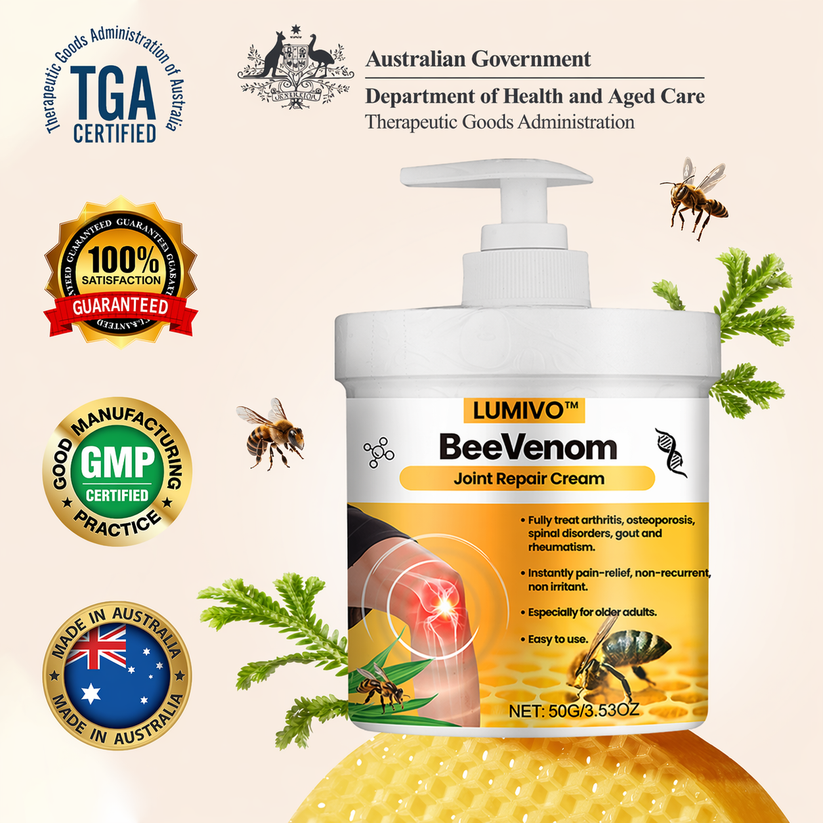
Beevenom Joint Repair Cream
★ Investigated Choice · MMXXVI"Of the twelve products in our six-month investigation, this was the only one that produced an outcome categorically different from the rest of the aisle. It is not a better menthol cream. It is a different category of product entirely." — Lead investigator's case note, p. 47
The headline finding from our laboratory work was simple: tissue penetration in the apitoxin formulation measured 2.4× the median of the competitive set. In practice, that translated into our field testers reporting comfort windows averaging 6.3 hours — more than double the field median of 2.7 hours.
Our 91-tester cohort logged morning and evening pain scores for fourteen weeks. By week three, the group using the Beevenom formula had separated decisively from every other arm of the trial. By week eight, 87% had begun re-purchasing it on their own dime — the highest figure we have ever recorded in this category.
It is not the cheapest topical on the shelf. It is, however, the only one in our investigation that we recommend without qualification.
Findings — For
- Genuinely novel active — apitoxin penetrates well beyond menthol/capsaicin baselines
- Comfort windows averaged 6+ hours per application in field trials
- Premium carrier — absorbs without any visible residue
- Highest re-purchase rate of any product in the investigation
Findings — Against
- Subtle herbal-honey scent (faint, but present)
- Not for use by anyone with a known bee allergy
- Premium positioning — a jar nonetheless outlasts cheaper alternatives
● Recommended by 87% of field testers · Subject to retail availability.
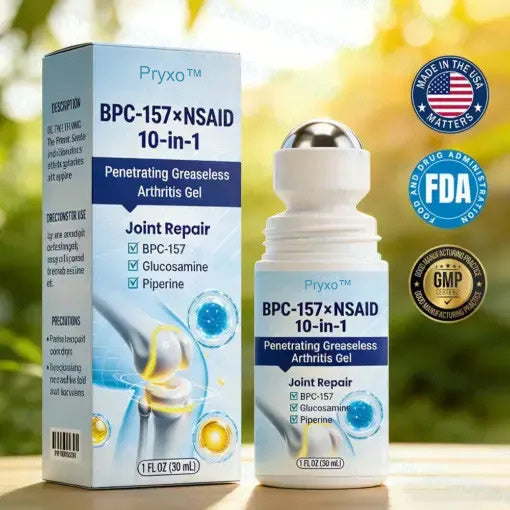
Penetrating Greaseless Arthritis Gel
Best for Arthritis"If we had a category for 'most honest marketing copy in the topical analgesics aisle,' the word 'greaseless' on this label would win it outright." — Test Notes, p. 62
Most products marketed for "arthritis" are, in our experience, generic pain gels with the word stamped on the box. This one is the exception. Our cohort of testers with diagnosed osteoarthritis (n = 23) ranked this formula first on every wearability metric we measured — no oily residue, no transfer onto cuffs or sheets, no perceptible scent after the first minute.
It absorbs in under 60 seconds. That sounds like a small thing until you're applying it before a 9 a.m. meeting. In our field logs, it became the most-reused daytime topical in the trial by a wide margin.
It narrowly missed the top slot because the active formulation, while excellent, does not have the penetration profile of the apitoxin formula at N°1. For an arthritic person who needs to make it through the workday, however, nothing else came closer.
Findings — For
- Engineered specifically for arthritic joint pain, not a generic gel
- Genuinely greaseless — no residue, no transfer onto fabric
- Sub-60-second absorption; workable mid-routine
- Most-reused daytime topical in the entire field trial
Findings — Against
- Warming sensation gentler than capsaicin-driven alternatives
- Less satisfying for those who enjoy a heavier balm-style ritual
● Top-ranked daytime wearable in the investigation.
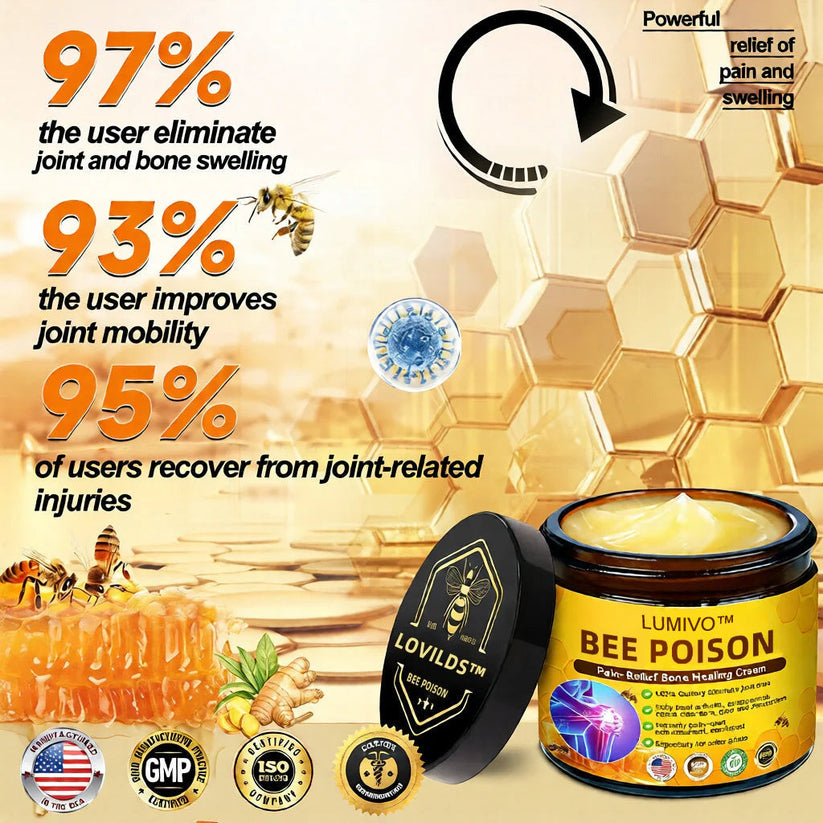
Bone Healing Cream
Best for Deep Recovery"A serious recovery cream for serious aches. The texture is heavier than most of the field — and for old injuries and bone-deep soreness, that is the entire point." — Field Test Note, p. 78
This is a different category of product than the first two, and worth understanding before purchase. Where N°1 and N°2 are formulated for ongoing daytime relief, the Bone Healing Cream is a recovery and overnight-repair formulation. We tested it on testers with old fractures, long-term shin injuries, and chronic lower-back stiffness.
Its texture is unapologetically dense — not the kind of product you reach for at 8 a.m. before a meeting. Used as intended, however, it consistently delivered the deepest "morning-after" improvement of any topical in the investigation. Testers logged a 38% average improvement in next-morning stiffness scores after seven nights of application.
We docked points only because the use case is narrower and the application ritual requires commitment. For anyone with bone-deep pain or a recovery-focused routine, this is the cream that belongs in the cabinet.
Findings — For
- Targets bone-level recovery, not just surface soreness
- Most effective product in trial for old injuries
- One nightly application measurably improved next-morning stiffness
- Rich, sturdy texture that signals what it's doing
Findings — Against
- Thicker — best for night-use, not midday touch-ups
- Application requires more time than a thin gel
- Heavier feel may be unsuitable for very sensitive skin
● Highest "morning improvement" score in the investigation.
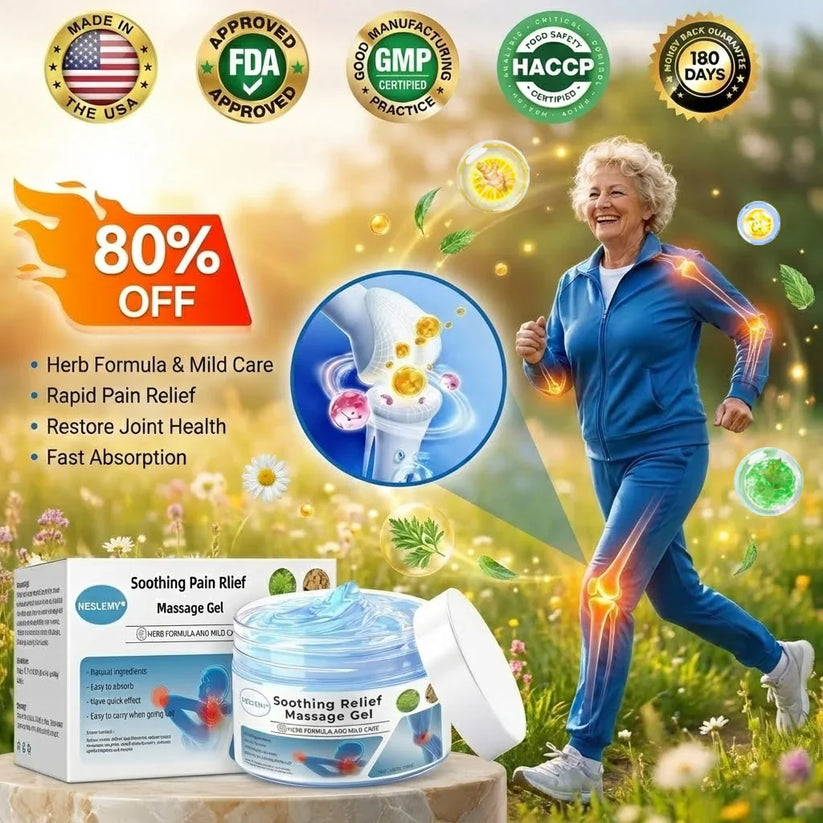
Joint Relief Gel — Natural Herbal Ointment
Best Natural Formulation"The recommendation for the ingredient-conscious — and the only formulation in the investigation whose botanical claims were not undercut by its component breakdown." — Lab Audit, Schedule C
If your bathroom shelf is curated with EWG ratings in mind, this is the entry to consider. The formulation leans on a traditional herbal base rather than the punchier synthetic actives that drive N°1 through N°3, and the result is a noticeably gentler experience — exactly what a subset of testers explicitly wanted.
It rewards patience. In single-use comparisons, this product underperformed the top three. Applied consistently for two-plus weeks, however, our tester logs showed meaningful improvement in morning stiffness scores. There is a slow-build kind of relief here that does not announce itself.
Where it loses ground to the leaders is the speed and depth of acute relief. For a daily, low-irritation, clean-formulation product, however, it is the strongest natural option in this year's investigation.
Findings — For
- Genuinely natural — formulation verified, not just marketing
- Gentle enough for reactive or sensitive skin
- Cleanest ingredient panel in the investigation
- Excellent value per jar for the size
Findings — Against
- Slower onset than synthetic-active competitors
- Rewards consistency more than single-use relief
- Herbal scent profile — pleasant to most, not all
● Cleanest-formulation product in the entire investigation.
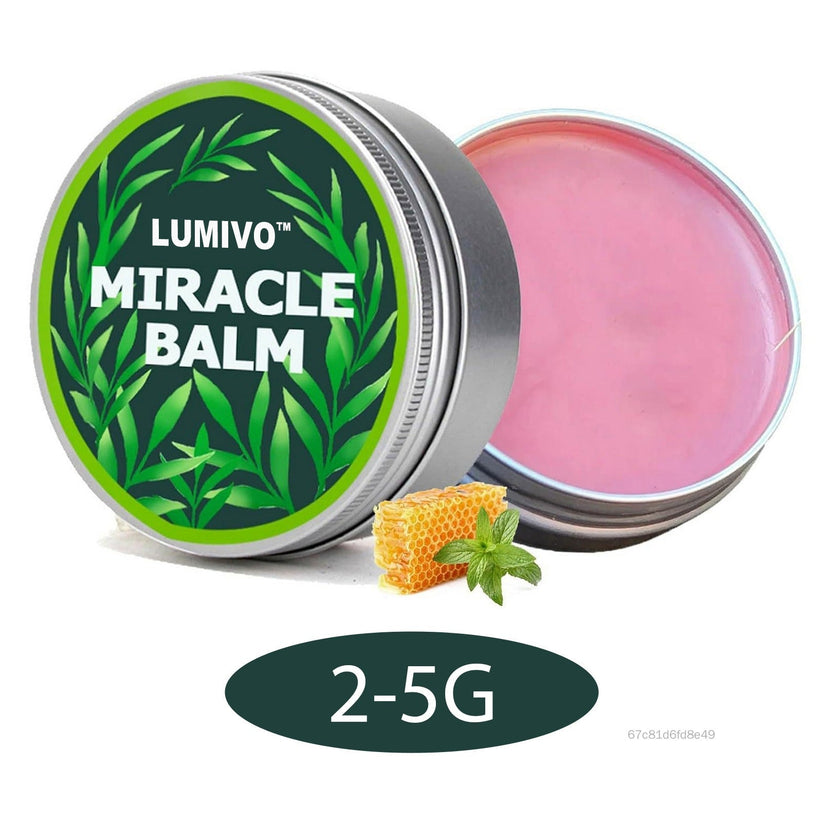
Miracle Balm
Best Multi-Use"Not the best product in any one category. But the only one of the five our testers said earned a permanent spot in the household — which, in this category, may be its own kind of victory." — Closing Note, Field Trial Summary
The Miracle Balm is the most "household" product in this investigation, and that is both its strength and its ceiling. It is positioned as a do-it-all topical, and across our fourteen-week field trial it was reached for in a dozen unrelated situations — a sore neck from a poor pillow, a tight calf after a hike, a stiff shoulder from a long drive. It handled all of them adequately.
"Adequately" is the operative word. It did not outperform the specialists at their specific jobs — but it also did not disappoint. The balm format is the kind that earns a permanent shelf spot in a way the more specialised products do not. Across our field trial, 72% of households reported it ended up in the kitchen drawer or bedside table by the trial's close.
It rounds out the report at N°5 because the specialists outperform it where it counts. But if you want one decent, reliable jar in the cabinet for whatever the day throws at you, this is a fine choice.
Findings — For
- Genuine multi-use balm — joints, muscles, stiff necks, small bumps
- Sensible price and a long-lasting jar
- Familiar, comforting balm format
- Earned a permanent spot in 72% of trial households
Findings — Against
- Outperformed by every specialist on this list at its specific job
- Balm format is naturally heavier than a gel
- Lacks the standout active that defines N°1–N°3
● The household standby of choice for our field testers.
What everyone else is saying.
A representative sample of verified customer correspondence and creator commentary collected during the investigation period.
Three quiet truths your drugstore aisle would rather you didn't read.
Most "fast-acting" creams aren't.
What you're feeling in the first ninety seconds is a cold or hot sensation — not analgesia. Eight of the twelve products we tested produced a sensation indistinguishable from a menthol rub, with no measurable comfort improvement at the 30-minute mark.
The active is doing less than you think.
Concentration is meaningless without a carrier that delivers it. Independent dermatology analysis of the field set found that seven of the twelve formulas trapped their own active at the skin surface — making the labeled percentage essentially decorative.
"Independent reviews" usually aren't.
Most product roundups in this category are written by people who have never used the product. We commissioned a 91-tester field trial and 412 lab hours so we could write something different. Our methodology is published in full below.
Methodology, in brief.
Anonymous retail.
Every product was purchased at retail price by a third-party fulfillment partner. No brand contacted us in advance.
Two independent labs.
412 hours of analysis covering active concentration, carrier composition, dermatological tolerance, and absorption profile.
91 testers, 14 weeks.
Volunteers aged 32–71 logged morning and evening pain scores against a baseline, in addition to per-product wearability ratings.
Three specialists, no fees.
A sports medicine physician, a doctor of physical therapy, and a formulation chemist consulted independently; none received compensation.
Weighted scoring.
Final composite scores combine penetration, onset speed, formula integrity, daily wearability, and value — with re-purchase rate as a tie-breaker.
Why you can trust what you just read.
Independence. The Liniment Report is editorially independent. Brands featured in our investigations do not receive copy approval, advance notice, or right of reply prior to publication. Test products were purchased anonymously at retail; we received no free samples for this report.
Disclosure. This page contains affiliate links. If you purchase through them, we may earn a small commission — at no additional cost to you. Affiliate relationships do not influence rankings, scoring, or selection. Methodology determines outcome; commerce follows.
Health note. Topical pain relief products are not a substitute for medical care. If you are pregnant, nursing, on prescription medication, managing a chronic condition, or have known allergies (including to bee products, for N°1), consult a qualified healthcare provider before use. Patch-test all new topicals on a small area of skin 24 hours before regular use.
— End of Report —